How to Fix a Clogged Drain: Step-by-Step Guide
Introduction
A clogged drain is one of the most common plumbing issues homeowners face. Whether it’s your kitchen sink, bathroom sink, or shower drain, a blockage can cause frustration and disrupt daily routines. Fortunately, with the right approach, many drain clogs can be fixed at home without calling a professional. In this guide, we’ll show you step-by-step how to unclog drains, prevent future blockages, and understand when it’s time to call a plumber.
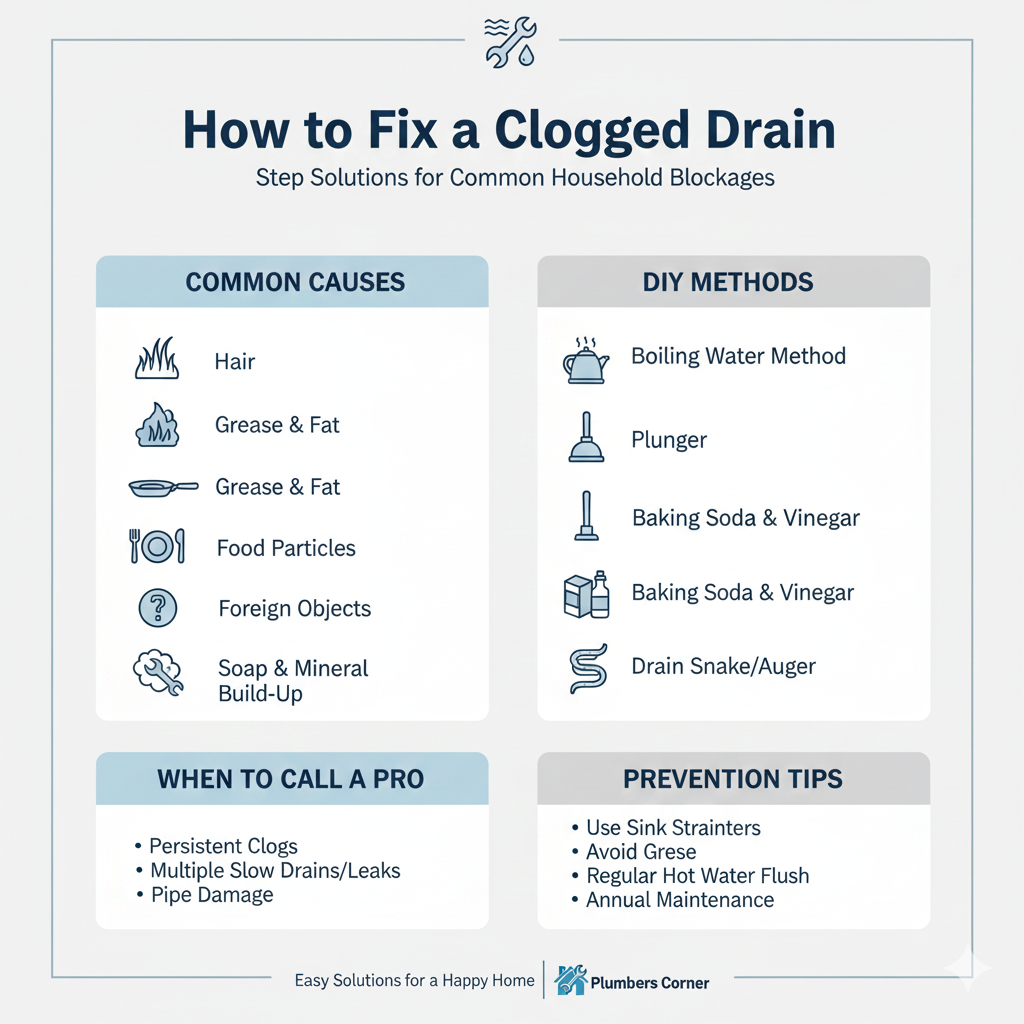
Common Causes of Drain Clogs
- Hair: Hair is a primary cause of bathroom drain clogs, often combining with soap residue to form a blockage.
- Grease and Fat: In kitchens, pouring cooking oils or fats down the sink can harden and block pipes.
- Food Particles: Small food scraps can accumulate over time, especially if the sink doesn’t have a strainer.
- Foreign Objects: Items accidentally dropped in drains can create complete blockages.
- Soap and Mineral Build-Up: Soap scum and hard water minerals gradually narrow pipes and reduce water flow.
DIY Methods to Fix a Clogged Drain
1. Boiling Water Method
Pouring boiling water down the drain can help dissolve grease and soap build-up. Do this slowly in stages for best results.
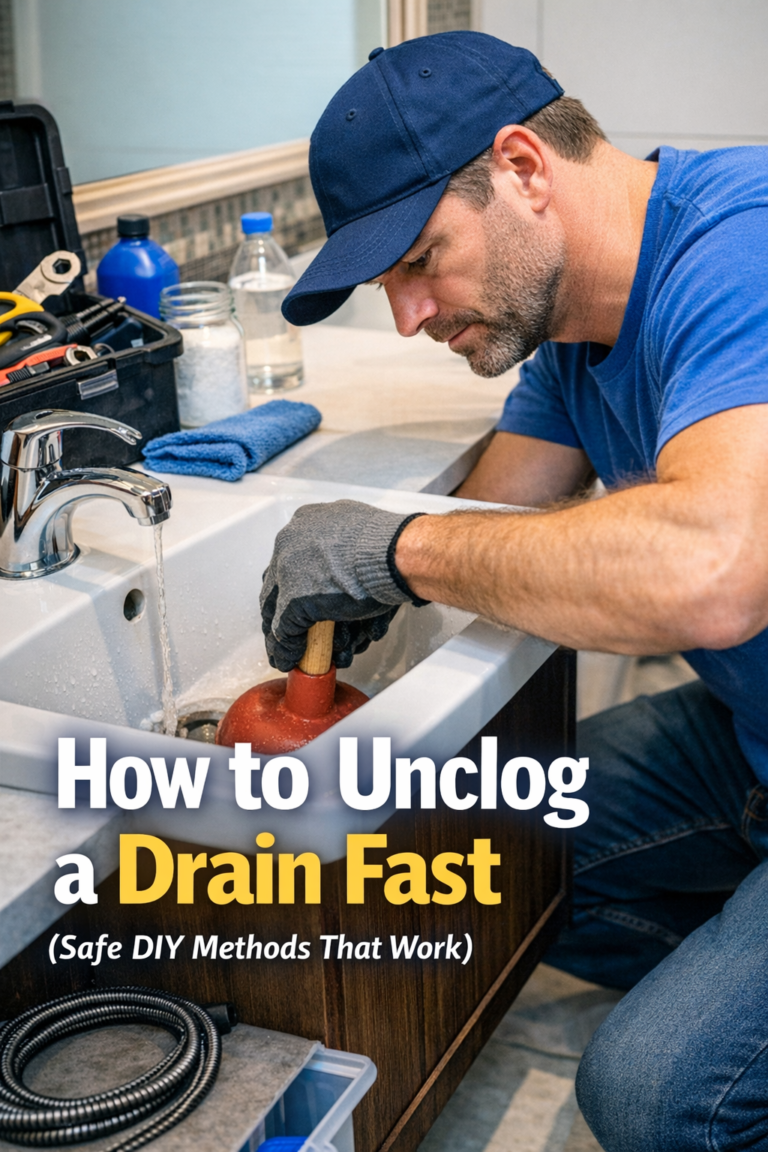
2. Plunger
A plunger creates suction to dislodge clogs. Ensure the plunger completely covers the drain and use firm, consistent plunges.
3. Baking Soda and Vinegar
- Pour 1/2 cup baking soda into the drain.
- Follow with 1/2 cup white vinegar.
- Cover the drain for 10-15 minutes.
- Flush with hot water. This chemical reaction can break down minor clogs naturally.
4. Drain Snake or Auger
A drain snake can reach deeper clogs. Insert the snake into the pipe and twist to hook or break up the blockage.
When to Call a Professional
- Persistent clogs that DIY methods cannot remove
- Foul odors or slow drains in multiple areas of the home
- Signs of pipe damage or leaks Professional plumbers have specialized tools to address severe blockages without damaging pipes.
Prevention Tips
- Use sink strainers to catch hair and food particles
- Avoid pouring grease or fats down the sink
- Regularly flush drains with hot water or a mild cleaner
- Schedule periodic professional drain cleaning for preventive maintenance
Conclusion
Clogged drains can be frustrating, but most can be fixed using simple DIY methods. By understanding the causes, using effective cleaning techniques, and practicing preventive maintenance, you can keep your drains flowing smoothly. However, for persistent or severe clogs, calling a professional plumber ensures safety and long-term solutions.