Vent Plumbing: Purpose, Types, and Importance
Introduction
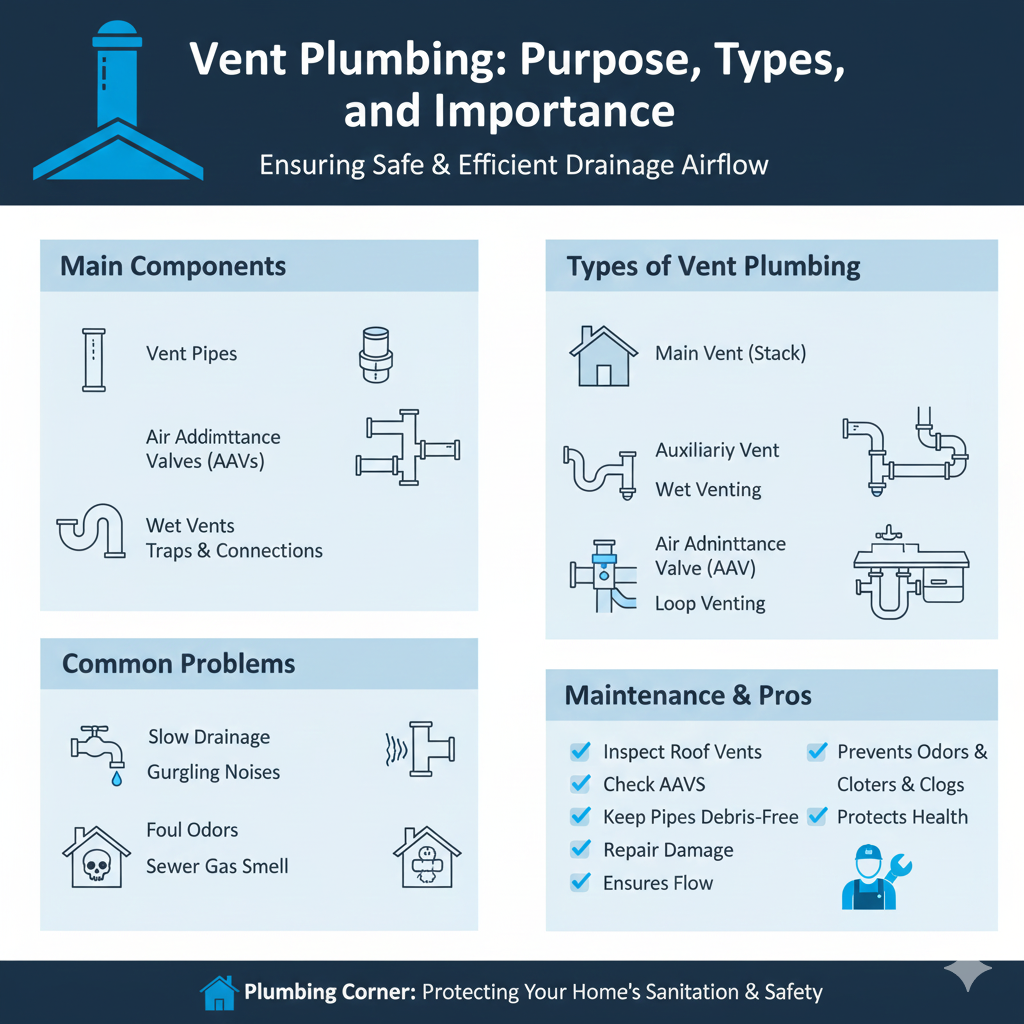
Vent plumbing systems are essential for maintaining proper airflow in drainage systems. They prevent airlocks, help drains flow smoothly, and stop sewer gases from entering homes and buildings.
Components of a Vent System
- Vent Pipes: vertical pipes extending to the roof
- Air Admittance Valves (AAVs): allow air in but prevent sewer gas out
- Wet Vents: combined waste and venting
- Loop Vents: used in island sinks and complex layouts
Types of Vent Plumbing
- Main Vent (Stack Vent) – Primary airflow pipe for drainage
- Auxiliary Vent – Supports additional fixtures
- Wet Venting – One pipe handles waste and ventilation
- Air Admittance Valve (AAV) – Mechanical vent alternative
- Loop Venting – Specific to islands or special layouts
Common Problems in Vent Plumbing
- Slow drainage
- Gurgling noises in drains
- Foul odors
- Sewer gas smell inside the building
Maintenance Tips
- Inspect roof vents for blockages
- Check AAVs for proper function
- Keep vent pipes free of debris
- Repair cracks or leaks promptly
When to Call a Plumber
- Persistent odors or gurgling
- Multiple fixtures draining slowly
- Blocked or damaged vent pipes
Conclusion
Proper vent plumbing ensures safe and efficient drainage while protecting occupants from harmful sewer gases.
Use Plumbing Corner to find licensed vent plumbing professionals near you.