Tankless vs Traditional Water Heaters: Which One Is Right for Your Home?
Introduction
Choosing the right water heater impacts your comfort, energy bills, and long-term home value. Homeowners often struggle to decide between tankless and traditional water heaters. This guide breaks down how each system works, their advantages and disadvantages, and how to choose the best option for your household.
What Is a Traditional Water Heater?
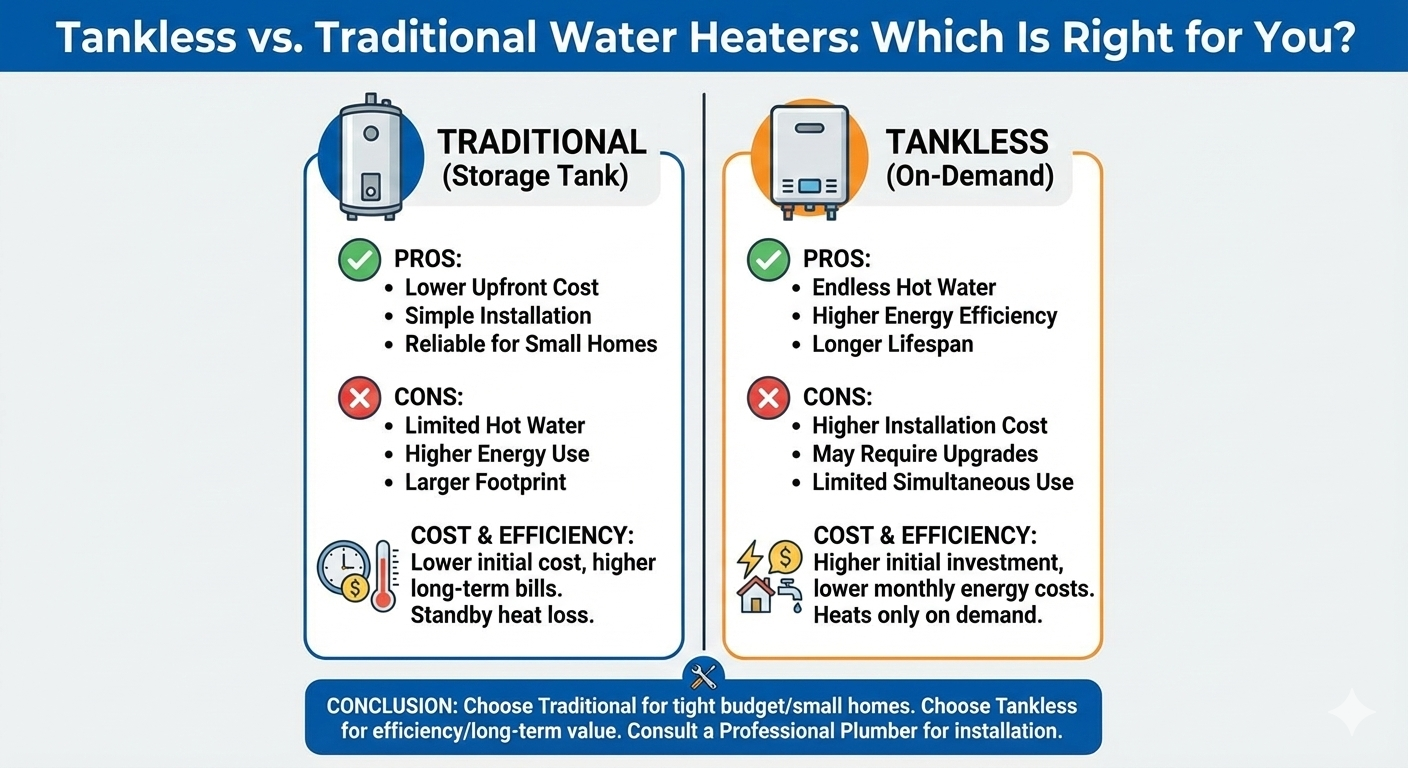
Traditional water heaters store hot water in a tank, usually holding 30–80 gallons. The heater continuously warms water, keeping it ready for use.
Pros:
- Lower upfront cost
- Simple installation
- Reliable for small households
Cons:
- Limited hot water supply
- Higher energy consumption
- Larger physical footprint
What Is a Tankless Water Heater?
Tankless systems heat water on demand, providing hot water only when needed.
Pros:
- Endless hot water
- Higher energy efficiency
- Longer lifespan
Cons:
- Higher installation cost
- May require electrical or gas upgrades
- Limited simultaneous usage in large homes
Cost Comparison
Traditional water heaters typically cost less upfront, while tankless units save money over time through lower energy use. Installation costs vary depending on home infrastructure.
Energy Efficiency and Performance
Tankless systems are generally more energy-efficient because they don’t heat unused water. Traditional heaters may lose energy through standby heat loss.
Which Is Best for Your Home?
Choose a traditional heater if you have a tight budget or smaller household. Choose tankless if you want efficiency, space savings, and long-term value.
Installation and Maintenance
Professional installation ensures safety and optimal performance. Routine maintenance extends lifespan for both systems.
Conclusion
Both tankless and traditional water heaters offer distinct benefits. The right choice depends on your budget, household size, and long-term goals. Use Plumbing Corner to find qualified plumbers who can help you choose and install the best system.