Gas Plumbing: Types, Safety, and Maintenance
Introduction
Gas plumbing delivers fuel for appliances like stoves, heaters, and boilers. Proper installation and maintenance are critical for safety and efficiency.
Components of Gas Plumbing
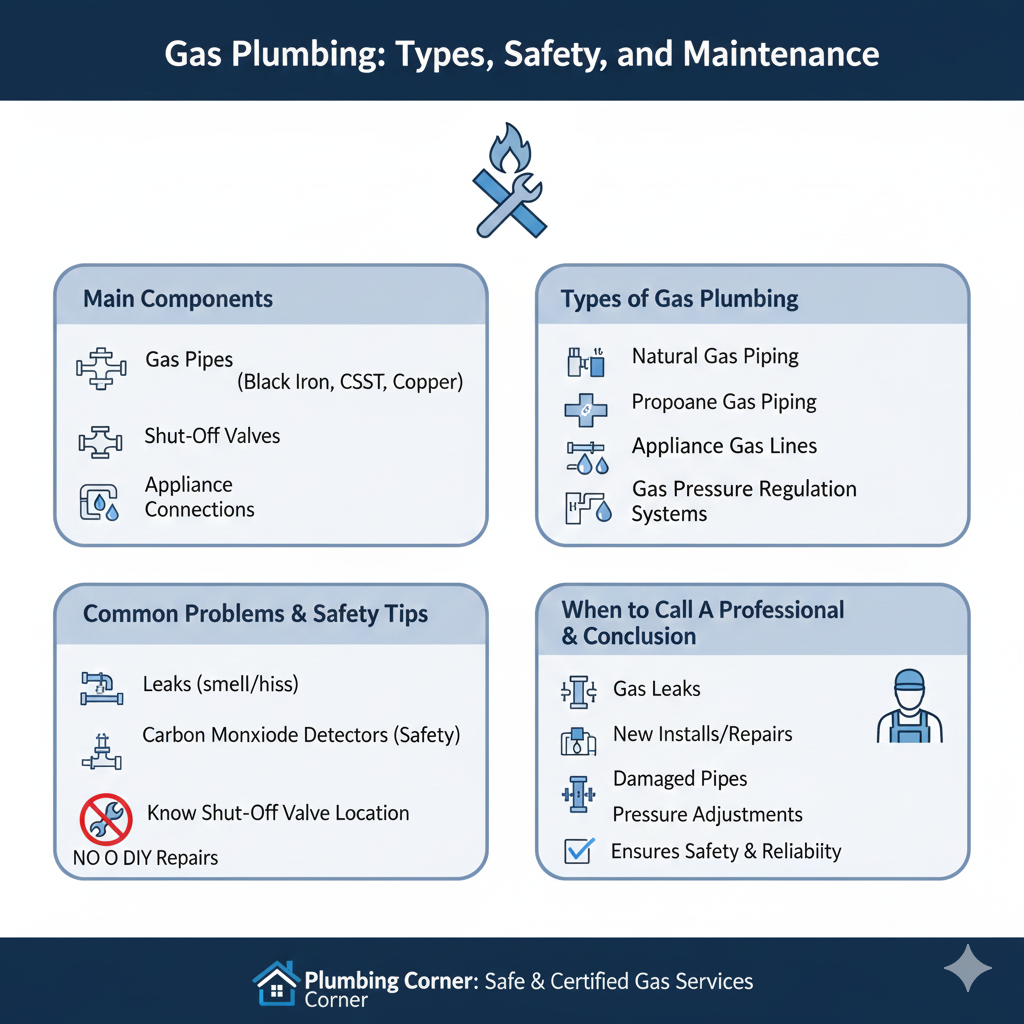
- Gas Pipes (Black Iron, CSST, Copper in some cases)
- Gas Meter: measures usage
- Shut-Off Valves: control flow for maintenance or emergencies
- Regulators: maintain safe pressure
- Appliance Connections: safely supply gas to stoves, water heaters, and furnaces
Types of Gas Plumbing
- Natural Gas Piping – Residential and commercial use
- Propane Gas Piping – Common in areas without natural gas lines
- Appliance Gas Lines – Connects appliances safely
- Underground Gas Lines – Buried lines supplying buildings
- Gas Pressure Regulation Systems – Maintains safe delivery pressure
Common Problems in Gas Plumbing
- Leaks (smell of gas or hissing sounds)
- Faulty regulators
- Improperly connected appliances
- Corroded or damaged pipes
Safety Tips
- Install carbon monoxide detectors
- Schedule annual inspections
- Never attempt DIY gas repairs
- Ensure proper ventilation
- Know the location of shut-off valves
When to Call a Professional
- Detect gas leaks
- Install new appliances or lines
- Repair damaged or corroded pipes
- Gas pressure regulation adjustments
Conclusion
Gas plumbing is essential but potentially dangerous. Professional installation and regular maintenance ensure safety and reliable service.
Find certified gas plumbers through Plumbing Corner for safe and expert service.