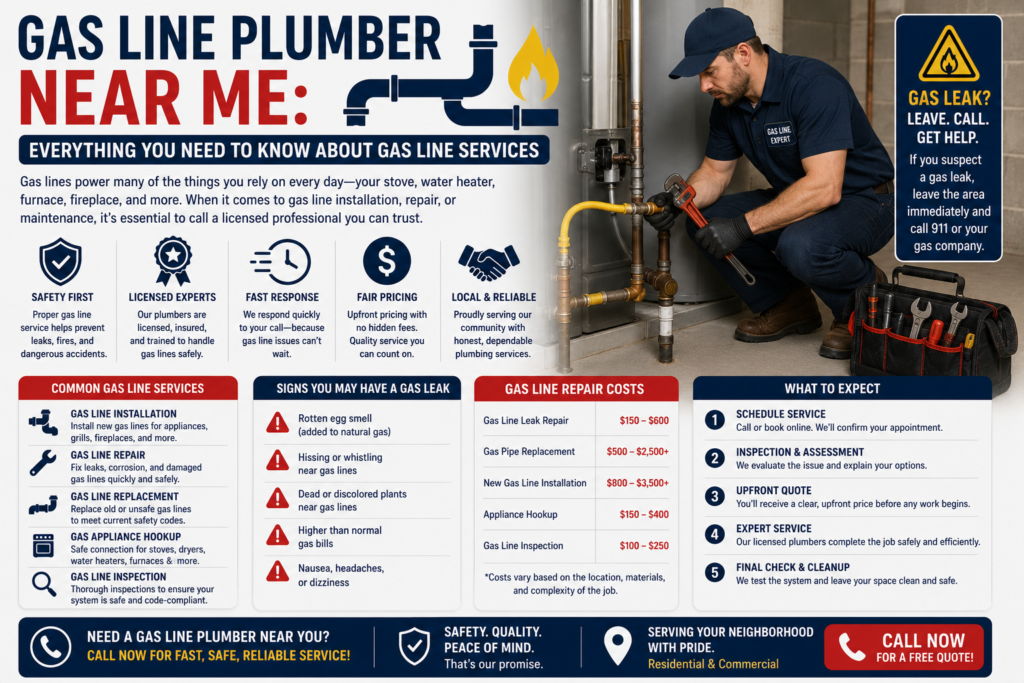
Gas line work is not a DIY project. Unlike leaky faucets or running toilets, a gas line mistake can be catastrophic — resulting in explosion, fire, or carbon monoxide poisoning. If you need a gas line installed, repaired, or extended, you need a licensed plumber with specific gas line certification. Here’s everything you need to know.
Signs You Have a Gas Leak — Act Immediately
- Smell of sulfur or rotten eggs near appliances or walls
- Hissing sound near gas lines or appliances
- Dead or discolored patches in your lawn above underground gas lines
- Bubbling in standing water near gas line paths
- Physical symptoms: dizziness, headache, nausea when at home
What to Do If You Suspect a Gas Leak
Do NOT turn any light switches on or off. Do NOT use your phone inside the building. Leave the building immediately, leaving doors open as you go. Once outside, call your gas utility’s emergency line and then a 24-hour emergency plumber. Do not re-enter the building until it has been inspected and cleared by both the utility company and a licensed gas plumber.
Gas Line Services a Licensed Plumber Provides
- New gas line installation (for outdoor grills, generator hookups, pool heaters)
- Gas line extension to new appliances
- Gas line repair and leak testing
- Gas pressure testing and inspection
- Gas shut-off valve replacement
- Converting from electric to gas appliances
Gas Line Installation Costs in 2026
- Gas leak repair: $150 – $400
- Gas line extension (per linear foot): $15 – $30 installed
- New gas line to outdoor grill: $200 – $600
- Gas line for whole-house generator: $500 – $1,500
- Full gas line inspection: $100 – $300
Why Gas Line Work Requires a Licensed Plumber
In virtually every US state, gas line work requires a licensed plumber or gas fitter who has passed a specific gas certification exam. Permits are required for most gas line work, and the work must be inspected. An unlicensed gas line installation can void your homeowner’s insurance, make your home unsellable, and — most critically — put your family’s lives at risk. Never hire anyone without verifying their gas line certification.
Leave a Reply