Introduction
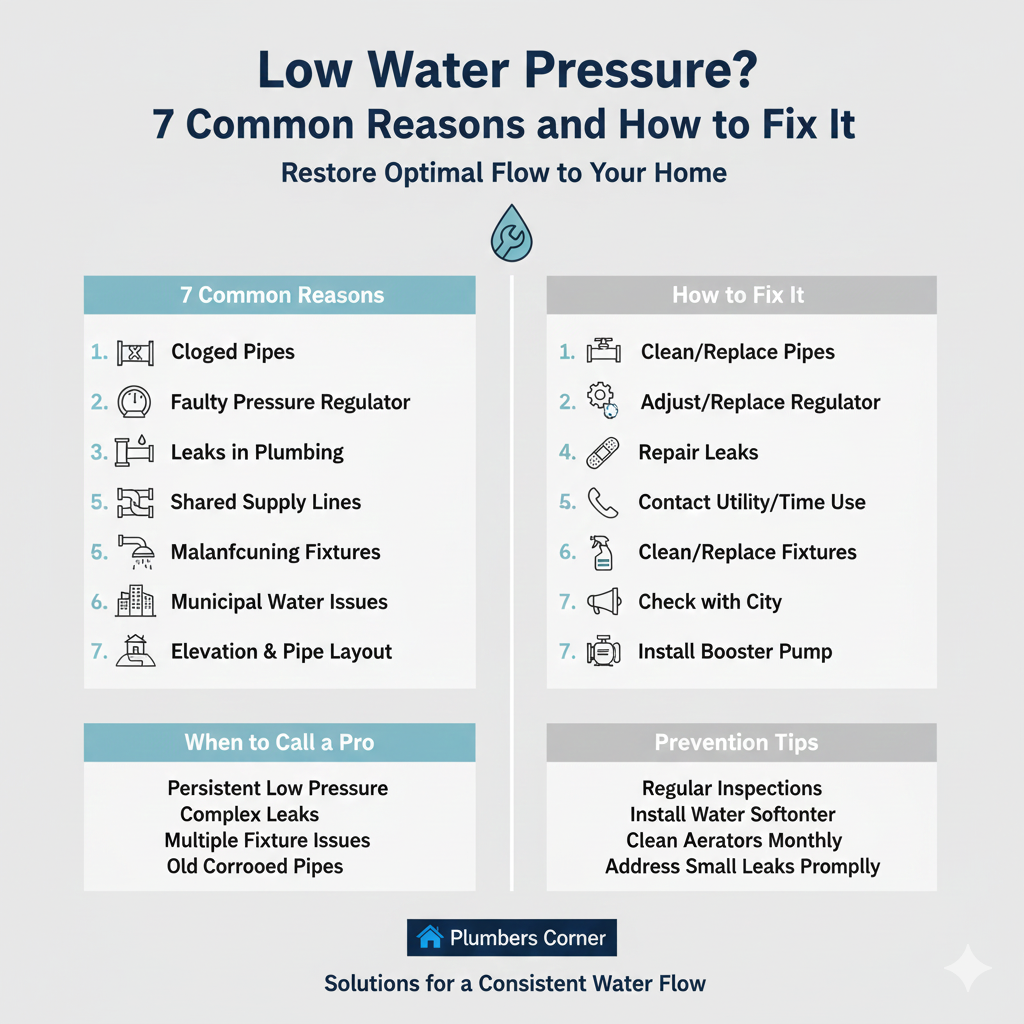
Low water pressure can be frustrating, affecting showers, faucets, and appliances throughout your home. Understanding the common causes helps homeowners troubleshoot effectively and take preventive measures. In this guide, we cover seven reasons for low water pressure and provide step-by-step solutions to restore optimal flow.
1. Clogged Pipes
Mineral buildup or corrosion inside old pipes can restrict water flow. Signs include uneven water flow, especially at distant faucets.
Fix: Clean or replace affected pipes and consider installing a water softener to prevent future buildup.
2. Faulty Pressure Regulator
Homes equipped with a pressure regulator may experience low pressure if the device malfunctions.
Fix: Inspect the regulator and adjust or replace it if necessary. A professional plumber can ensure proper calibration.
3. Leaks in the Plumbing System
Hidden leaks can reduce pressure throughout your home and increase water bills.
Fix: Check for damp spots, running water sounds, or unusually high bills. Repair leaks promptly to restore pressure.
4. Shared Supply Lines
Neighborhood water supply or shared lines in older buildings can cause temporary pressure drops.
Fix: Contact your utility provider to check for supply issues or schedule peak-time water usage strategically.
5. Malfunctioning Fixtures
Showerheads, faucets, and aerators may become clogged or worn, reducing water flow.
Fix: Clean or replace fixtures and remove mineral deposits regularly.
6. Municipal Water Supply Problems
Occasional maintenance, main breaks, or infrastructure issues can temporarily affect water pressure.
Fix: Confirm with local water authority and wait for restoration or request a check on municipal supply lines.
7. Elevation and Pipe Layout
Homes on higher elevations or with long plumbing runs can experience reduced pressure due to gravity and pipe friction.
Fix: Install a booster pump or adjust plumbing layout for consistent pressure.
DIY Troubleshooting Checklist
- Inspect all faucets and fixtures for clogs
- Check the pressure regulator for proper functioning
- Look for visible signs of leaks
- Flush pipes to remove sediment buildup
- Monitor water usage patterns for clues about shared supply issues
When to Call a Professional
- Persistent low pressure throughout the home
- Leaks that cannot be located or repaired easily
- Complex plumbing configurations or multiple fixture issues
- Suspicion of old corroded pipes needing replacement
Preventive Tips
- Schedule regular plumbing inspections
- Install water softeners if you have hard water
- Clean faucet aerators and showerheads monthly
- Address small leaks promptly to prevent larger problems
Conclusion
Low water pressure can disrupt daily life, but most causes are identifiable and fixable. By troubleshooting common issues, performing preventive maintenance, and knowing when to call a plumber, you can maintain a consistent, strong water flow throughout your home.