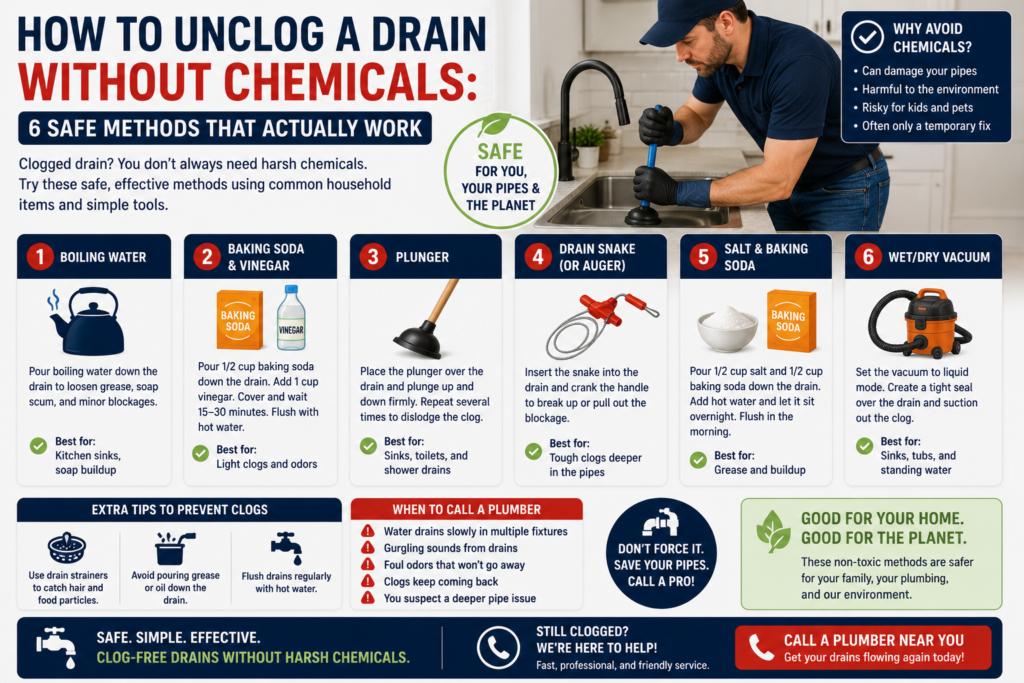
Before you reach for a bottle of chemical drain cleaner, try these six proven methods for clearing a clogged drain. Chemical cleaners can damage older pipes, are hazardous to handle, and often only provide a temporary fix. These natural and mechanical methods are safer, more effective, and better for your plumbing in the long run.
Method 1: Boiling Water (For Grease & Soap Clogs)
This works best for kitchen sinks clogged with grease or soap buildup. Boil a full kettle of water and slowly pour it directly into the drain in two to three stages, waiting 30 seconds between each pour. The heat melts grease and dissolves soap residue. Do NOT use this method on PVC pipes, as very hot water can soften the joints.
Method 2: Baking Soda and Vinegar
Pour half a cup of baking soda followed by half a cup of white vinegar directly into the drain. Cover the drain opening to force the reaction downward. Wait 15–30 minutes, then flush with hot water. The chemical reaction between the baking soda and vinegar creates fizzing action that can break up soft blockages and deodorize the drain at the same time.
Method 3: Manual Removal (For Hair Clogs)
Hair is the number one cause of bathroom drain clogs. Use a hair removal tool (a plastic drain snake with barbs, available for $3–$5 at hardware stores) to pull out hair and debris. Remove the drain stopper, insert the tool, rotate it, and slowly pull it out. You will find this method surprisingly effective and satisfying — and disgusting.
Method 4: Plunger Technique
Most people use a plunger incorrectly. Cover any overflow holes with a wet cloth first — this creates the needed seal. Use a cup plunger (not the flanged toilet plunger) on sink and tub drains. Fill the sink with enough water to cover the plunger cup, then use firm, rapid plunging strokes for 20–30 seconds. Break the seal on the upstroke to create suction, then pull sharply.
Method 5: Drain Snake (For Deep Clogs)
A manual drain snake (also called a plumber’s auger) is the homeowner’s most effective tool for serious clogs. Insert the cable into the drain, push it through until you feel resistance, then rotate the handle clockwise to break through or grab the blockage. Pull the snake out slowly while rotating it. A 25-foot drain snake costs around $25–$50 and can handle most residential clogs.
Method 6: Clean the P-Trap
The P-trap is the curved pipe section under your sink. It frequently collects debris and is one of the easiest DIY plumbing tasks. Place a bucket under the P-trap, unscrew the slip joints (by hand or with channel-lock pliers), remove the curved section, clean it out, and reassemble. This costs nothing and takes 10 minutes.
When to Call a Plumber for a Clogged Drain
- Multiple drains are clogged at the same time (main line blockage)
- You’ve tried all DIY methods and water still won’t drain
- Sewage smell is coming from drains (potential sewer line issue)
- The clog keeps coming back within days of clearing it
Leave a Reply