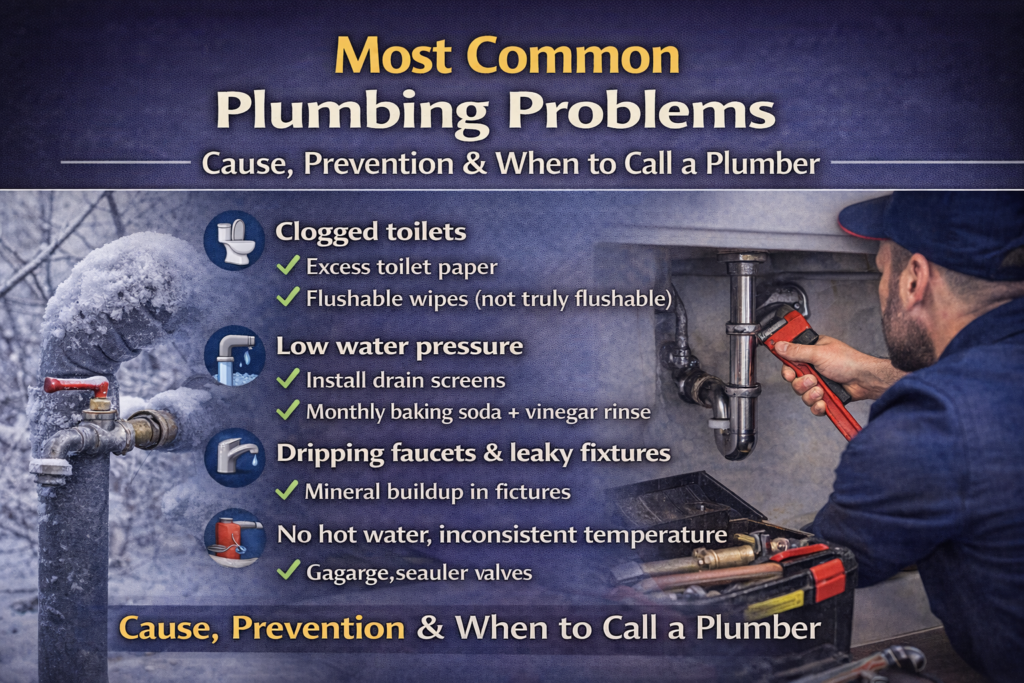
The Most Common Plumbing Problems in Homes (And How to Prevent Them)
Every home experiences plumbing problems at some point — but most can be prevented with a little awareness and maintenance. Whether it’s slow drains, water pressure issues, or recurring leaks, these small problems often lead to big repair bills if ignored.
Let’s break down the most common plumbing problems, what causes them, and how to prevent them from becoming emergencies.
1. Clogged Toilets
Why it happens:
- Excess toilet paper
- Flushable wipes (not truly flushable)
- Toys or objects stuck in the trap
Prevention:
✔ Limit flushable items
✔ Keep a trash can near the toilet
✔ Teach kids what not to flush
2. Slow or Clogged Drains
Why it happens:
- Hair buildup
- Soap scum / grease
- Foreign objects in pipes
Prevention:
✔ Install drain screens
✔ Monthly baking soda + vinegar rinse
✔ Never pour grease down kitchen drains
3. Low Water Pressure
Why it happens:
- Mineral buildup in fixtures
- Leaks in the plumbing system
- Water supply or valve issues
Prevention:
✔ Clean aerators every 3 months
✔ Check shut-off valves for partial closure
✔ Call a plumber if pressure drops suddenly
4. Dripping Faucets & Leaky Fixtures
Why it happens:
- Worn washers, O-rings, gaskets
- Excessive water pressure
- Corroded faucet components
Prevention:
✔ Fix leaks early (cheap fix now, expensive later)
✔ Install pressure regulator if needed
5. No Hot Water or Inconsistent Temperature
Why it happens:
- Failing heating element
- Sediment buildup in the tank
- Thermostat issues
Prevention:
✔ Flush water heater yearly
✔ Check thermostat settings
✔ Insulate tank to improve efficiency
6. Pipe Leaks & Burst Pipes
Why it happens:
- Old plumbing material
- High pressure or freezing temperature
- Corroded joints/weak fittings
Prevention:
✔ Insulate exposed pipes
✔ Maintain normal household temperature
✔ Have old pipes inspected regularly
7. Sewer Line Backups
Why it happens:
- Tree roots invading pipes
- Grease & wipes causing main blockages
- Collapsed or old sewer lines
Prevention:
✔ Never flush wipes or grease
✔ Annual drain cleaning
✔ Add sewer backflow protection device
When DIY Isn’t Safe
Call a plumber if:
- Water backs up in multiple drains
- There’s a sewage smell indoors
- Rusty water or low pressure suddenly appears
- You find moisture behind walls or ceilings
DIY can make some problems worse — especially with gas, sewer, or structural-related plumbing.
Final Takeaway
Plumbing problems are common — disasters aren’t.
Prevent them early, respond quickly, save money long-term.
👉 Find a plumber near you at PlumbersCorners.com
👉 Plumbing businesses: Get more leads by listing your service