Introduction
Drainage plumbing, also called sanitary plumbing, removes wastewater and sewage safely from buildings to prevent contamination and damage.
Components of a Drainage System
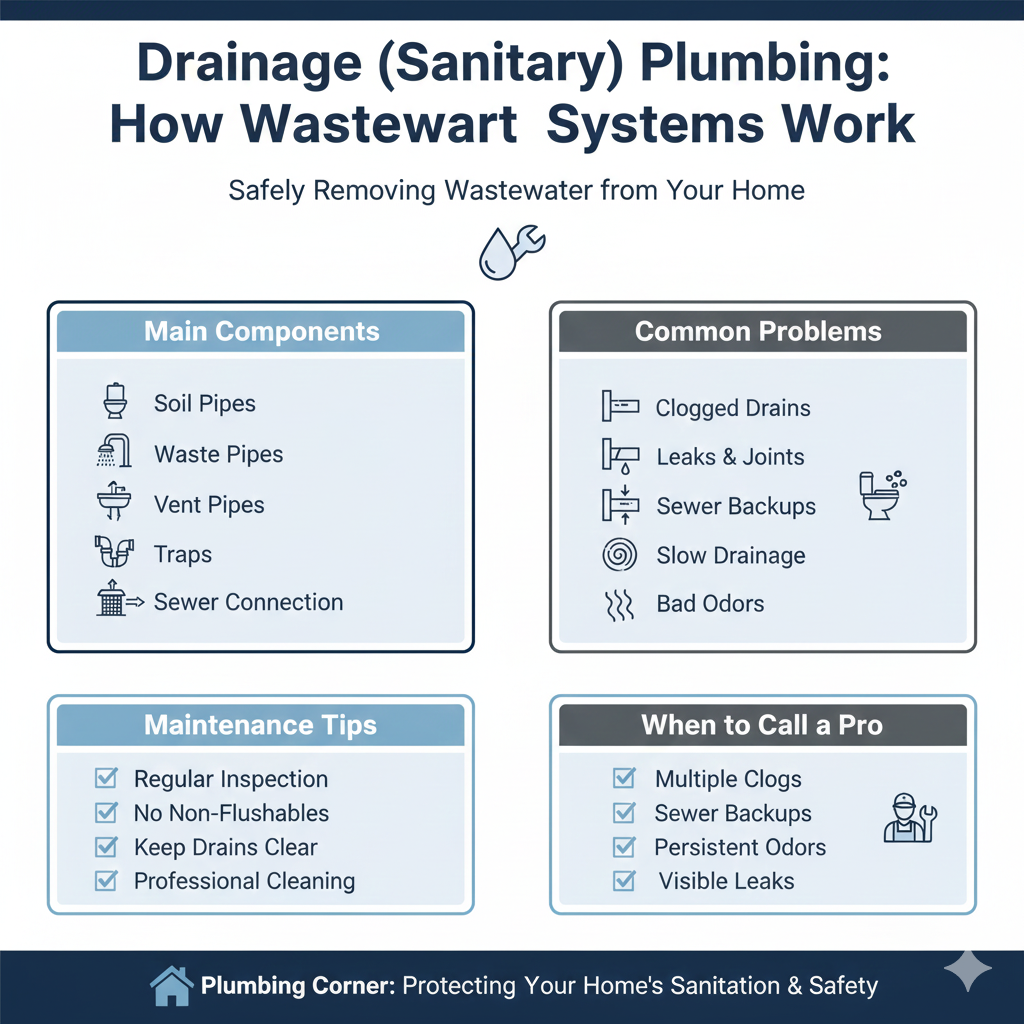
- Soil Pipes: carry toilet waste
- Waste Pipes: handle sink and shower water
- Vent Pipes: prevent airlocks and sewer gases
- Traps: block odors
- Sewer Connection: links to municipal or septic system
Types of Drainage Plumbing
- Soil Pipe System
- Waste Pipe System
- Combined Drainage System
- Stormwater Drainage
- Sewer Line System
Common Problems
- Clogged drains
- Leaks in pipes or joints
- Sewer backups
- Slow drainage
- Bad odors
Maintenance Tips
- Regular inspection
- Avoid flushing non-degradable items
- Keep drains clear
- Schedule professional cleaning
Call a Professional When
- Multiple fixtures clog simultaneously
- Sewer backups occur
- Persistent odors
- Visible leaks or water damage
Conclusion
A well-maintained drainage plumbing system ensures sanitation and protects your property from water damage.
Find trusted drainage plumbers on Plumbing Corner.