Introduction
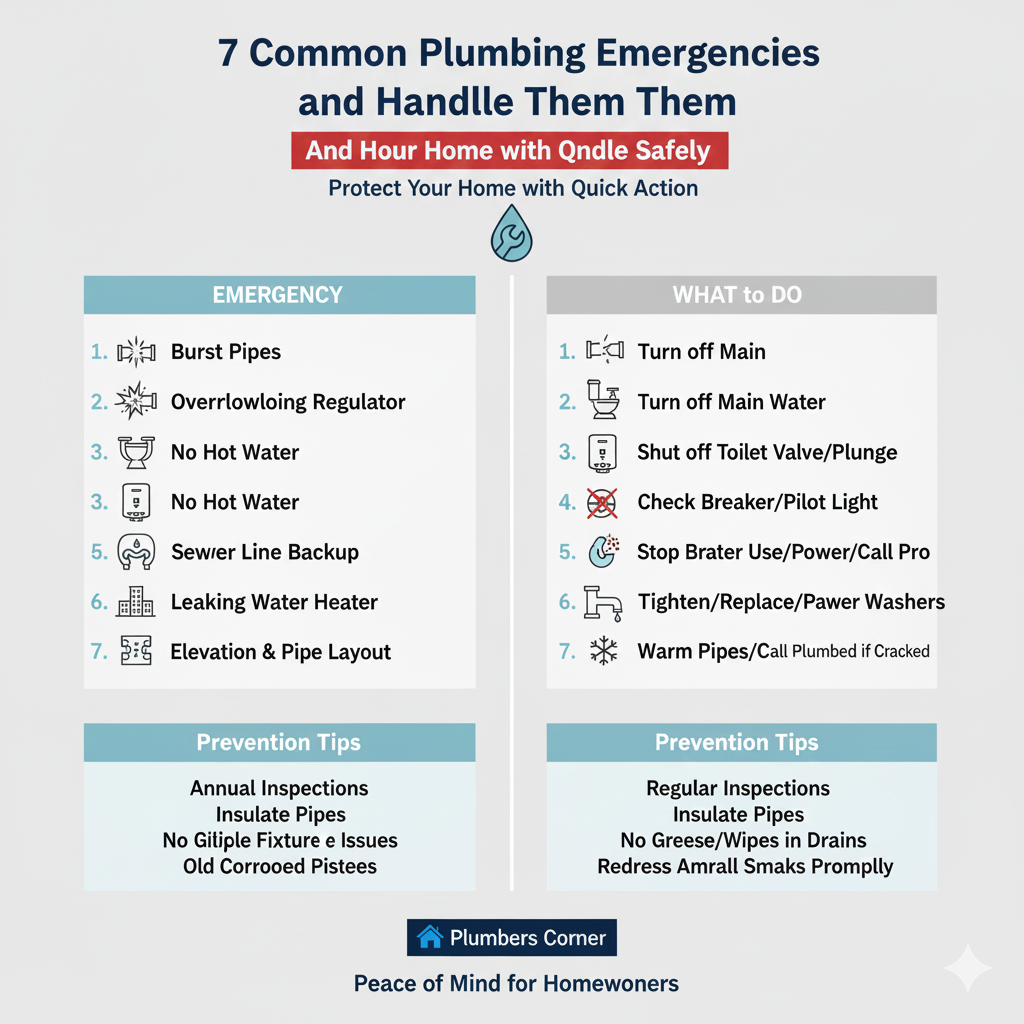
Plumbing emergencies can happen without warning, causing serious damage if not handled quickly. From burst pipes to overflowing toilets, knowing what to do during these situations can save you time, money, and stress. This guide explains the most common plumbing emergencies and the safest steps to take before a professional arrives.
1. Burst Pipes
A burst pipe is one of the most destructive plumbing issues. It can flood your home within minutes. What to do:
- Turn off the main water supply immediately.
- Open faucets to drain remaining water.
- Call an emergency plumber.
2. Clogged or Overflowing Toilets
A clogged toilet that begins to overflow can create sanitation hazards. What to do:
- Shut off the toilet’s water valve.
- Use a plunger to attempt clearing the clog.
- Avoid flushing again until the blockage is resolved.
3. No Hot Water
If your water heater stops working, it may be due to a failed heating element, sediment buildup, or thermostat issues. What to do:
- Check the water heater’s breaker or pilot light.
- Inspect for leaks.
- Call a plumber if the issue persists.
4. Sewer Line Backup
Slow drains, foul smells, and gurgling toilets may signal a sewer backup. What to do:
- Stop using water in the home.
- Avoid DIY chemicals—they worsen the problem.
- Contact a plumber for immediate inspection.
5. Leaking Water Heater
A leaking tank can cause water damage and mold. What to do:
- Turn off the water supply to the heater.
- Shut off the power or gas connection.
- Call a plumber for repair or replacement.
6. Leaking Faucets or Fixtures
Constant dripping wastes water and increases your bill. What to do:
- Tighten handles or replace worn washers.
- If the leak continues, call a professional.
7. Frozen Pipes
Cold weather can cause pipes to freeze and eventually burst. What to do:
- Turn on faucets to relieve pressure.
- Use a hair dryer (never a torch) to warm pipes.
- Contact a plumber if you notice cracks.
Tips to Avoid Plumbing Emergencies
- Schedule annual plumbing inspections.
- Insulate exposed pipes in winter.
- Avoid flushing wipes or pouring grease down drains.
- Replace old plumbing fixtures before they fail.
Conclusion
Plumbing emergencies can escalate quickly, but knowing how to respond makes a major difference. Take immediate action, protect your home, and call a professional plumber when needed. A reliable directory like Plumbing Corner helps you find trusted plumbers near you anytime you face an emergency.