Introduction
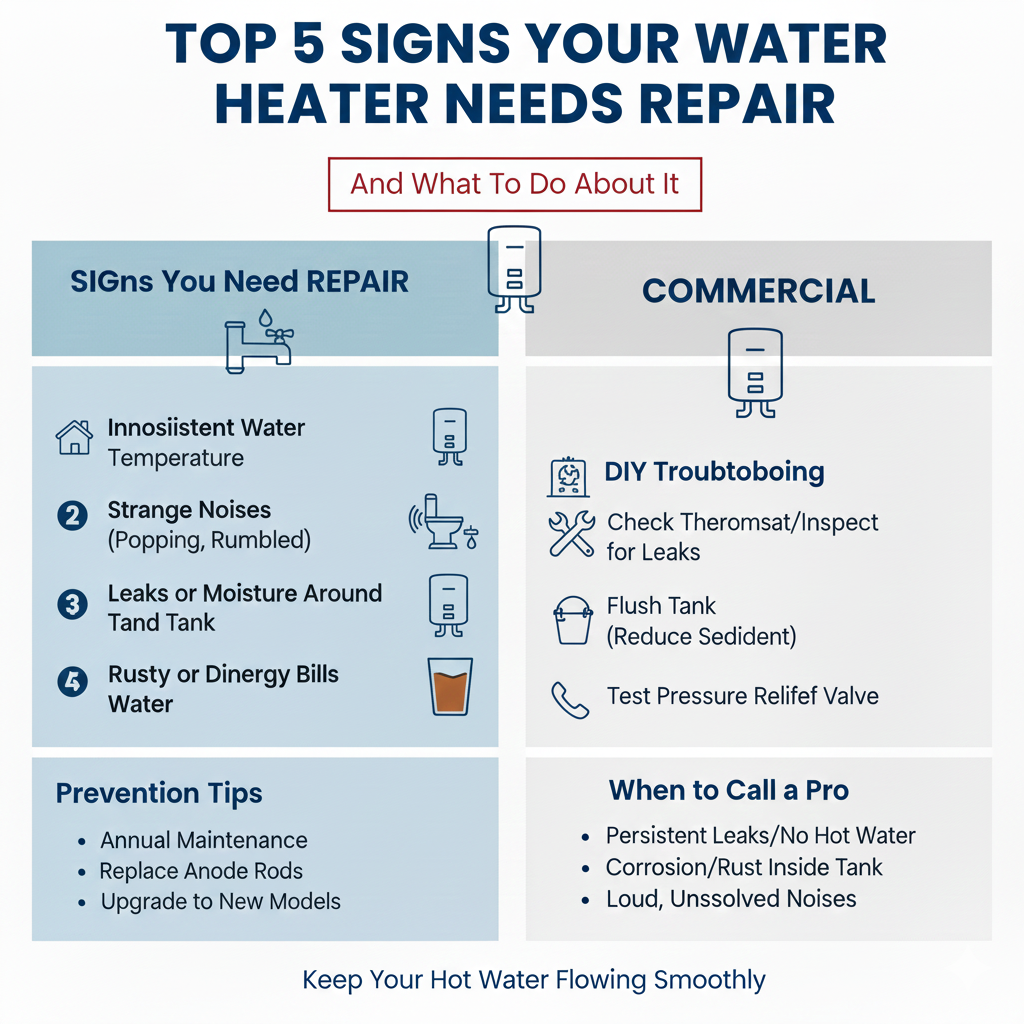
A malfunctioning water heater can disrupt your daily routine and lead to expensive repairs if ignored. Recognizing early warning signs allows homeowners to act before small issues become major problems. This guide outlines the top five signs that your water heater needs repair and offers practical advice on troubleshooting, preventive maintenance, and knowing when to call a professional plumber.
Sign 1: Inconsistent Water Temperature
One of the most noticeable signs of a failing water heater is inconsistent water temperature. You may experience sudden drops in hot water or alternating between scalding and lukewarm water. Causes include:
- A faulty thermostat
- Sediment buildup in the tank
- Heating element malfunction
Sign 2: Strange Noises
Unusual sounds coming from the water heater, such as popping, rumbling, or banging, can indicate sediment accumulation at the bottom of the tank. Over time, sediment hardens and causes the water to overheat and boil, producing noise. Ignoring this can lead to corrosion and tank failure.
Sign 3: Leaks or Moisture Around the Tank
Visible water pooling near your water heater is a serious warning. Leaks can result from:
- Corrosion of the tank
- Loose connections
- Faulty pressure relief valves Even minor leaks can cause significant water damage over time.
Sign 4: Rusty or Discolored Water
If the hot water appears brown or has a metallic taste, the tank may be rusting inside. This can contaminate your water supply and eventually compromise the tank’s structural integrity. Regular flushing and inspections can help prevent rust buildup.
Sign 5: Rising Energy Bills
A sudden spike in energy bills can indicate that your water heater is working harder than it should to heat water. Causes may include inefficient heating elements, sediment buildup, or an aging unit losing efficiency.
DIY Troubleshooting Checklist
- Check the thermostat: Ensure it is set to the correct temperature.
- Inspect for leaks: Look around the tank, pipes, and valves for signs of moisture.
- Flush the tank: Removing sediment can improve efficiency and reduce noises.
- Test the pressure relief valve: Make sure it opens and closes properly to prevent excess pressure.
When to Call a Professional
- Persistent leaks or water damage
- No hot water after troubleshooting
- Signs of corrosion or rust inside the tank
- Unusual noises that persist after flushing Professional plumbers can repair or replace heating elements, valves, or the entire water heater if needed.
Preventive Tips
- Schedule annual maintenance for inspection and flushing
- Keep the area around the water heater dry and clear
- Replace anode rods periodically to prevent rust
- Upgrade to energy-efficient models to save costs and improve performance
Conclusion
Being proactive about water heater maintenance can save money and prevent unexpected failures. Recognize the top warning signs early, perform basic troubleshooting, and seek professional help when necessary. Keeping your water heater in good condition ensures a reliable supply of hot water for your home.